Melasma Treatment Philippines | Dark Spots & Pigmentation | Le Meur Aesthetics
If you have been managing melasma for years — trying every brightening serum, every recommendation, every new formula — and watching it quietly return every time, you are not imagining things. Melasma is one of the most common and most persistent skin concerns in the Philippines, and it is notoriously resistant to quick fixes.
The good news is that with the right medical-grade approach, it can be genuinely managed. At Le Meur Aesthetics, our board-certified physician approaches melasma the way all complex skin concerns deserve to be approached — with a proper diagnosis, a personalized protocol, and honest expectations from the very first consultation.
This is what actually works.
What Is Melasma, and
Why Is It So Common in Filipino Skin?
Melasma is a form of hyperpigmentation — a condition in which certain areas of the skin produce excess melanin, creating brown or grey-brown patches. It most commonly appears on the cheeks, forehead, upper lip, and nose bridge, and is far more prevalent in Filipino skin than many people realize.
There are three compounding reasons for this:
Melanin-rich skin tones. Higher melanin content — common across Southeast Asian skin types — means the skin's pigment-producing cells (melanocytes) are more reactive to UV light, heat, and hormonal shifts. More melanin is a natural advantage in many ways, but it also means pigmentation responds more intensely to triggers.
Year-round UV intensity. The Philippines' tropical climate delivers high UV radiation consistently across all twelve months — not seasonally, as in cooler countries. Cumulative sun exposure is far greater than most people consciously register.
Hormonal triggers. Melasma is strongly influenced by hormones — it frequently appears during pregnancy, with oral contraceptive use, or during hormonal fluctuations. In the Philippines, the pregnancy-related pattern is commonly called the "mask of pregnancy."
The result is melasma that fades slightly in lower-UV seasons, then returns. A cycle that repeats year after year — until it is addressed properly at its root.
Why Brightening Products Alone Often Disappoint
There is no shortage of brightening serums and toning creams on the Philippine market — and many are thoughtfully formulated. The honest truth, however, is that most are not designed to treat melasma. They are designed for surface-level radiance.
Melasma doesn't live at the surface.
The excess melanin in melasma is produced deep within the skin, at the dermal-epidermal junction — and sometimes in the deeper dermis itself. Topical ingredients like niacinamide, vitamin C, and kojic acid can help maintain results and prevent new pigmentation from forming, but they are unlikely to clear established melasma on their own.
This is not a failure of the product. It is simply a matter of depth. Medical-grade treatment reaches where topical products cannot — which is precisely why it creates a difference that serums and creams cannot sustain on their own.
The Le Meur Melasma Protocol: CureStem Exosomes
At Le Meur, our approach combines multiple modalities, sequenced to your skin's specific pattern of pigmentation. There is no single treatment that clears melasma in all skin types — which is exactly why we begin with a proper physician consultation rather than a one-size-fits-all package.
CureStem Exosomes is one of our most advanced treatments for stubborn pigmentation. It delivers exosomes — growth-factor-rich cellular messengers — directly into the skin, where they support cellular renewal and help regulate melanocyte activity at the source of the problem.
This is regenerative science applied to pigmentation: not suppressing discoloration from above, but addressing the cellular behavior driving it. CureStem is particularly effective for deeper, more persistent melasma that has not responded well to surface-level approaches.
Lase-MD Laser Skin Resurfacing
Lase-MD is a US-FDA-approved fractional laser that works beneath the skin's surface to reduce pigmentation while simultaneously stimulating collagen production. It addresses melasma with clinical precision — targeting excess melanin while leaving surrounding tissue intact.
Sessions are gentle with minimal downtime. Most clients experience mild redness for 24 to 48 hours, after which skin appears clearer and more refined. For melasma that has a visible surface component alongside its deeper layers, Lase-MD is one of the most effective tools in our clinic.
Why Your Melasma Needs Its Own Plan
No two melasma cases are exactly alike. Two clients can present with what appears to be the same dark patch in the same location — and require completely different treatment sequences based on pigmentation depth, hormonal history, skin tone, and sun exposure habits.
This is why the Le Meur approach always begins with a physician consultation — not a sales conversation. Our doctor will assess:
The depth of your pigmentation (superficial versus deep dermal)
Your hormonal and lifestyle context
Your skin's reactivity and sensitivity to active treatments
Which combination of modalities will produce the most stable, long-lasting results for you specifically
First-time clients receive a complimentary skin analysis and personalized treatment plan. It is the only responsible starting point for melasma management — and it is yours, at no cost.
Honest Expectations: What Melasma Management Actually Looks Like
We believe that honest expectations are themselves a form of luxury — so here is the truth about melasma:
Melasma is manageable, not curable in a single session. The melanocytes that produce excess pigment remain in the skin, meaning melasma can return with unprotected sun exposure, hormonal changes, or heat. The goal of medical-grade treatment is to significantly reduce visible pigmentation and keep it consistently clear through a personalized maintenance plan.
Results build gradually, not overnight. Depending on the treatments selected and the depth of your pigmentation, visible improvement typically begins within two to four weeks and becomes more pronounced over subsequent sessions and months.
Consistency matters as much as the treatment itself. Between sessions, daily medical-grade sunscreen is non-negotiable. This partnership between in-clinic treatment and committed home care is what separates sustained, beautiful results from temporary ones.
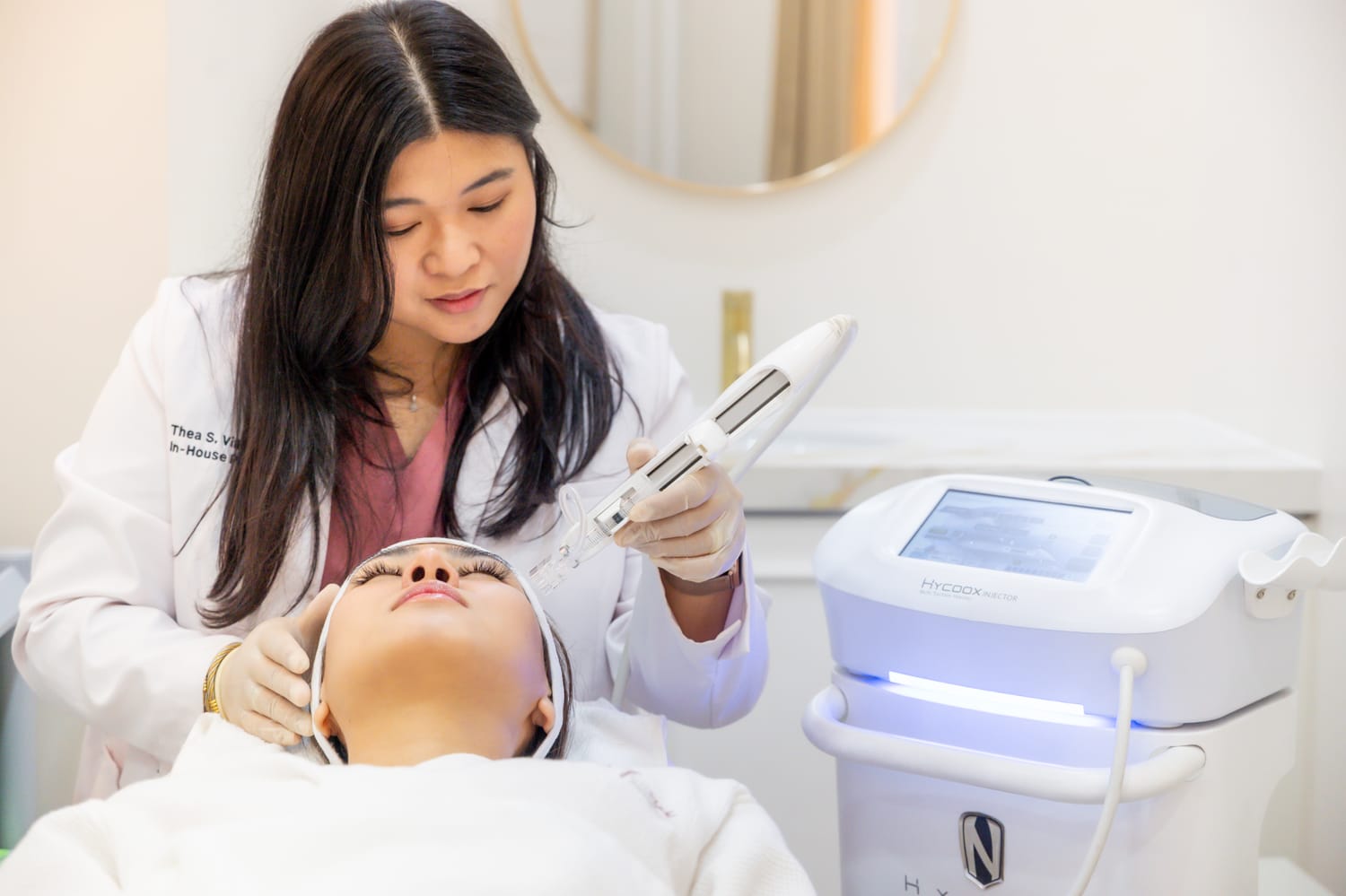
Dr. Rosette Thea Santos-Villegas, MD, MBA
Dr. Rosette Thea Santos-Villegas is the board-certified in-house physician at Le Meur Aesthetics, overseeing the clinic's Ultherapy and regenerative treatments. Guided by a natural-results philosophy, she believes the finest outcomes begin with honest consultation, medical expertise, and genuine care.
Stay informed with valuable ageless beauty and wellness tips delivered straight to your inbox.
Visit us:
📍QC Branch — Banawe5th Floor, Banawe, Lifestyle Center
Banawe Street, Quezon City, Metro Manila 1114
🕙Clinic Hours:
Monday — Sunday, 10:00 AM to 7:00 PM
Walk-ins welcome · Last booking at 6:00 PM
📍Greenhills Branch5th Floor, New Greenhills Mall
Ortigas Avenue, San Juan City, Metro Manila
🕙Clinic Hours:
Monday — Thursday, 11:00 AM to 8:00 PM
Friday — Sunday, 10:00 AM to 7:00 PM
Walk-ins welcome · Last booking at 6:00 PM
📍Makati Branch28th Floor, Rufino Pacific Towner
Ayala Avenue, Makati City, Metro Manila
🕙Clinic Hours:
Monday — Friday, 09:00 AM to 6:00 PM
Walk-ins welcome · Last booking at 3:00 PM
Book today: 0917-639-6963 · (02) 8660-2467
Or message us on Instagram: @lemeur.aesthetics
Merci, and we look forward to caring for your skin.
FAQ
Melasma is a chronic condition — meaning it can recur, particularly with UV exposure and hormonal triggers. However, with consistent medical-grade treatment and daily sunscreen, it can be kept significantly clear and well-managed long-term.
This varies by the depth and pattern of your pigmentation. Your physician will give you a realistic timeline during your first consultation. Most clients begin seeing meaningful change within two to four weeks of beginning treatment.
Lase-MD is a gentle fractional laser with minimal discomfort. Most clients describe a warm, tingling sensation during the session. Downtime is typically 24 to 48 hours of mild redness.
Dark spots from acne scars (post-inflammatory hyperpigmentation) or sun damage have different causes and are treated differently from true melasma. An accurate diagnosis by a physician ensures you receive the right treatment — not just the most marketed one.
Yes. CureStem Exosomes, Lase-MD, Hydrafacial, and Aquagold are available across our Banawe, Greenhills, and Makati branches. Your treatment plan and physician notes travel with you between branches.
Book a complimentary skin analysis and physician consultation — available to all first-time Le Meur clients. From there, your doctor will build a treatment plan tailored to your skin. No obligation, no pressure.

Advanced Aesthetics & New Age Regenerative Medicine